
Aquarium Status
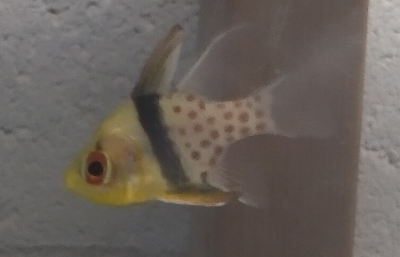
I'm three months into earnestly setting up my reef tank, a goal I've been working on for over ten years. Here is the first status update.
Display Tank update
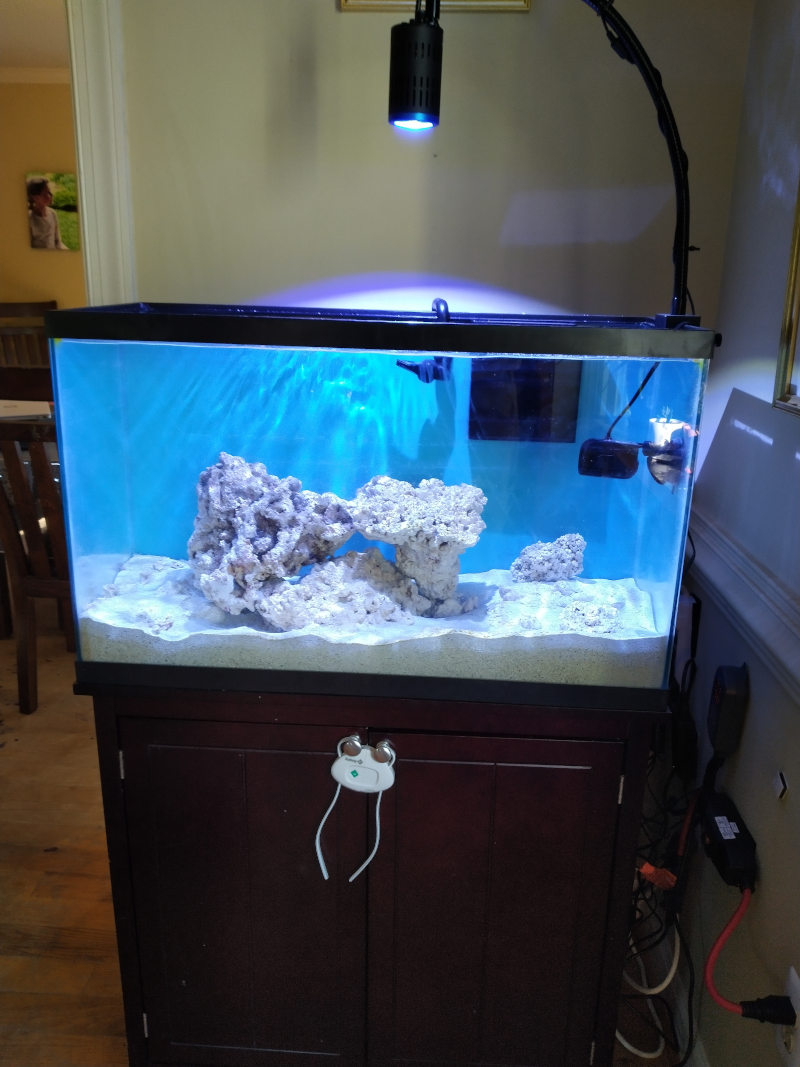
The main display tank has been up and running for over 2 months now. It is long ago cycled. It's a 29 gallon tank, with a DIY sump made from a 10 gallon aquarium. I started it with dead, cleaned rock and live sand, then seeded it with bio-spira. About two weeks ago I added chaeomorpha algae and a jar of copepods1 barn to the sump, and began feeding about 1/3 oz. of phytoplankton per day2. If I shut off the return pump and let things settle down, I can see some, so I'm assuming the population is doing at least okay.
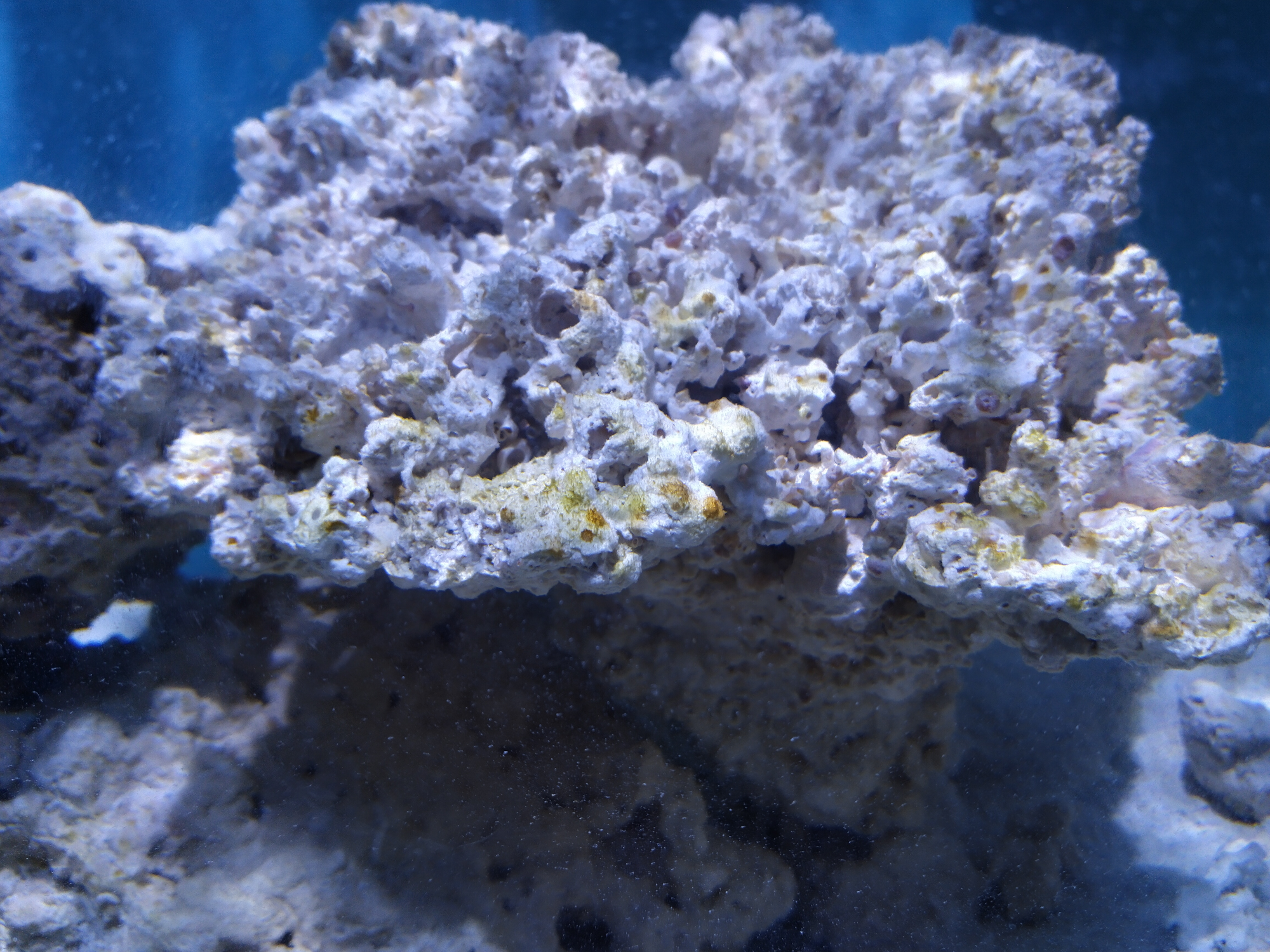
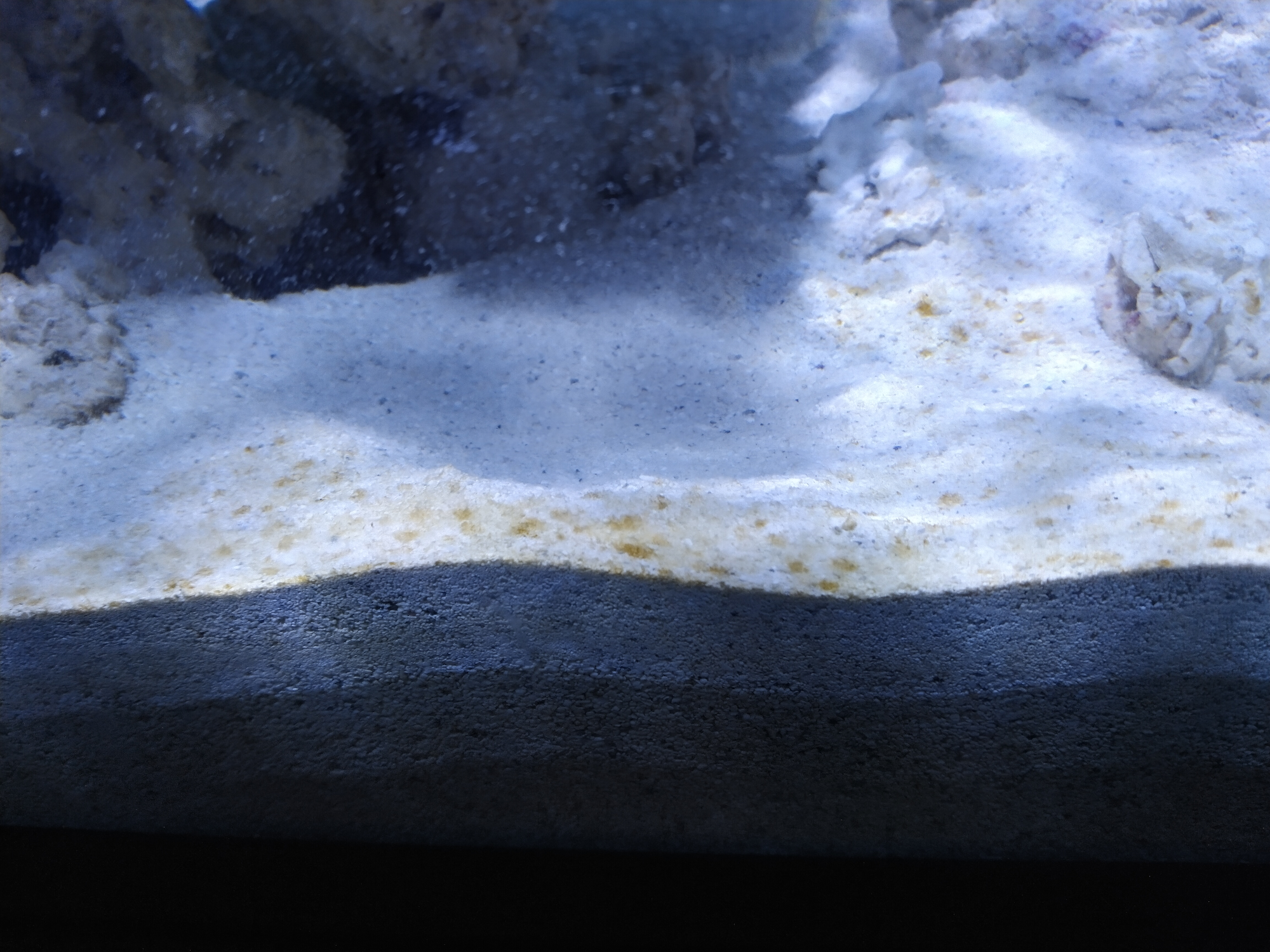
Since adding the chaeto I've also been turning on the lights in the tank, and have generated what appears to be a healthy population of diatoms. I expect the phytoplankton plus output of the copepods are producing enough nutrients to support them.
Quarantine
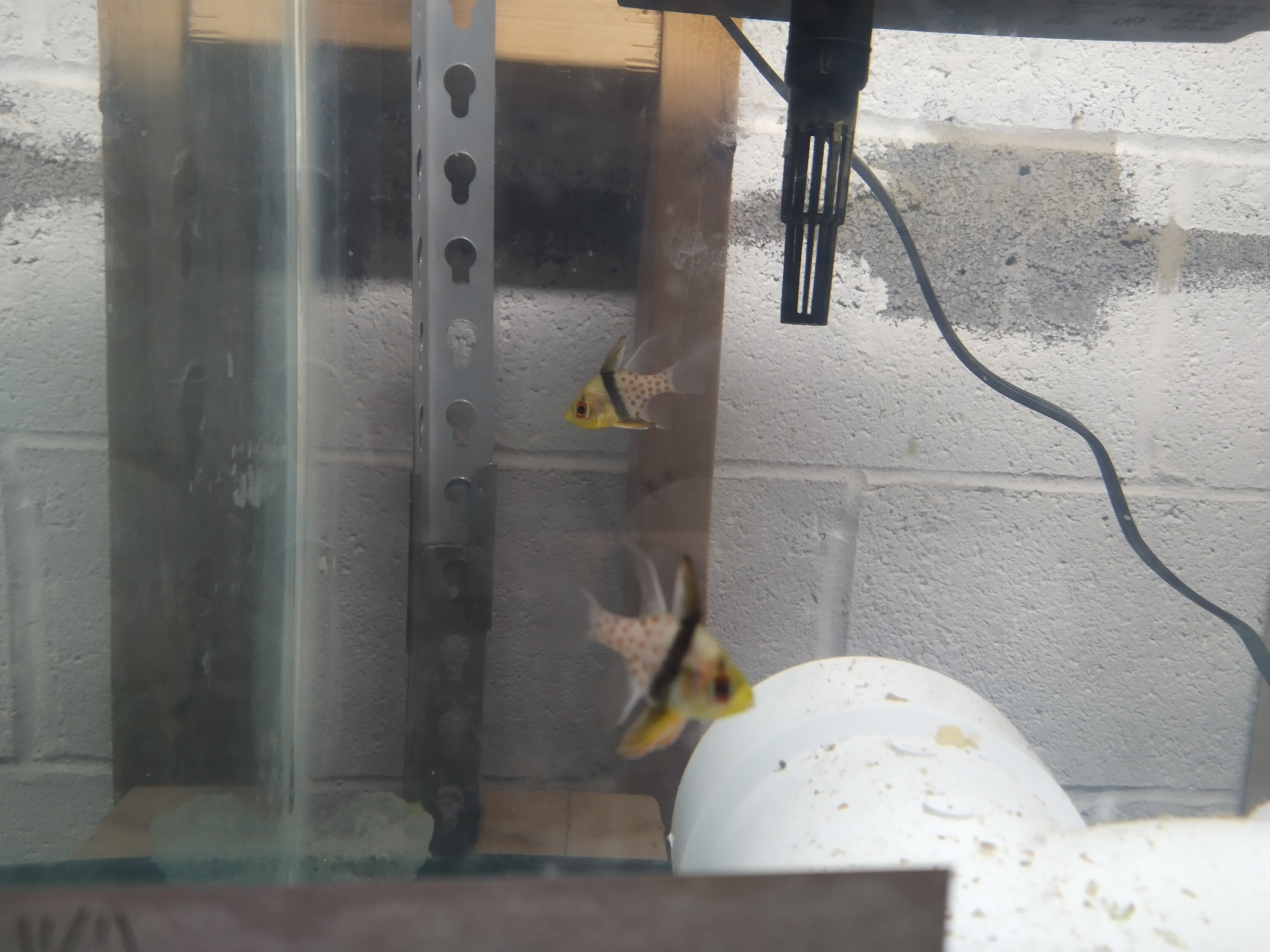
Meanwhile, last weekend I picked up three pajama cardinal fish and the beginnings of my clean-up-crew. I opted for three blue-legged hermit crabs, three astrea snails, and three nassarius snails.
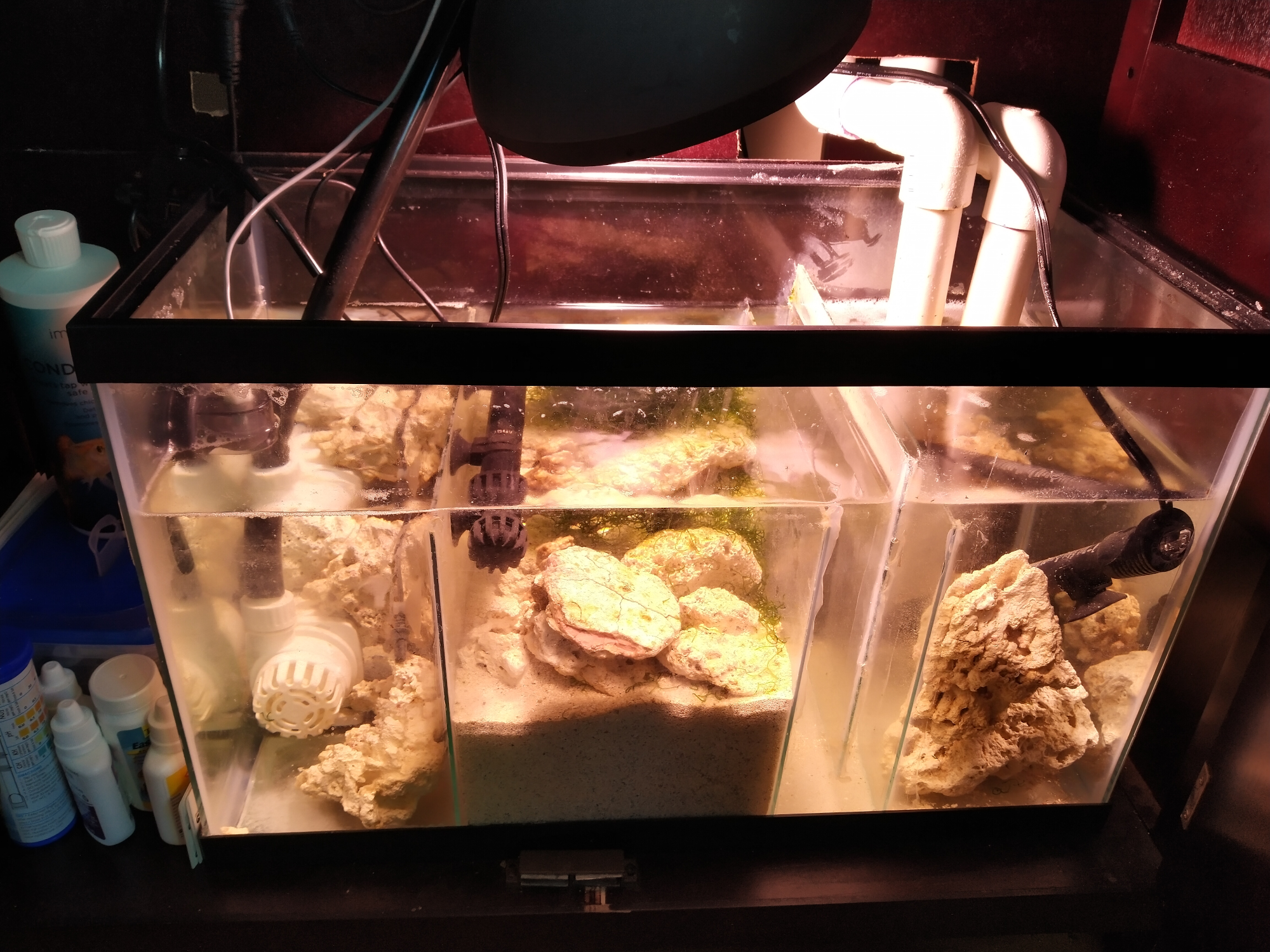
In order to avoid problems down the line, I am using a reasonably strict quarantine procedure before adding anything to the display tank. The treatment of fish and invertebrates is different, so I setup two 20 gallon tall tanks and clearly labeled them as either "fish" or "invert". Invertebrates are highly intollerant of copper (which is why it's a good treatment for fish), so it's important that the two tanks are kept separate.
Each tank was setup basically identically with the following:
- 100W heater
- hang on back filter rated for up to 40 gallons
- ammonia alert badge
- thermometer
- marinepure biospheres
- 2 PVC tee junctions
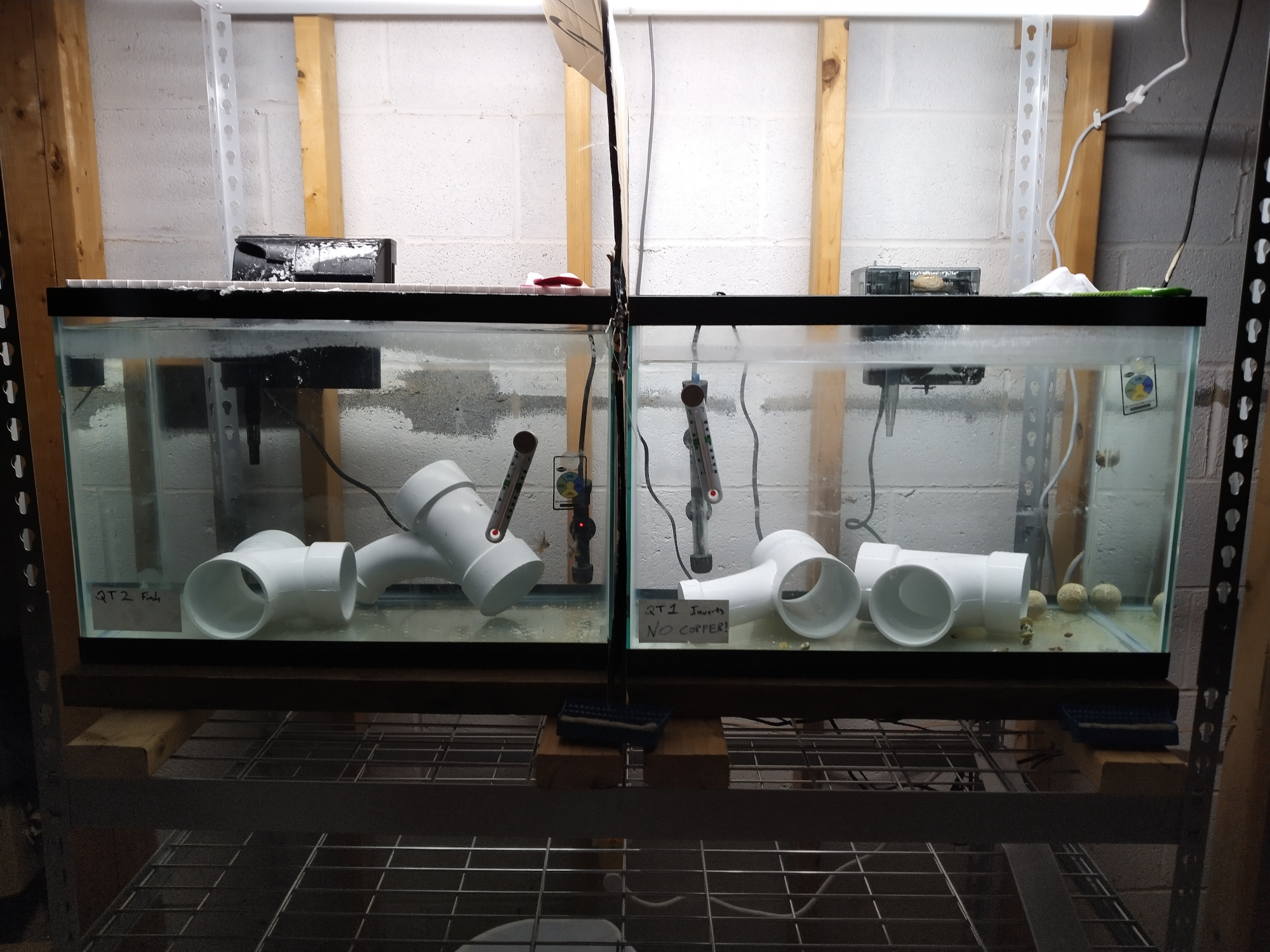
I began their cycle with Dr. Tim's all-in-one, but the tank didn't cycle after two weeks, so I suspect the bottle got frozen or cooked in transport. I tried again with biospira, and after a few days the tank was clearing out 2ppm of ammonia within 24 hours, indicating a healthy population of nitrifying bacteria. Ammonia, nitrates, and nitrites were tested with API test kits.
Fish quarantine
After a great deal of research, I've settled on the Humblefish method for quarantining the fish. Part of this process includes the prophylactic treatment of potential disease. The goal is to eradicate any of the more common or likely diseases that may live in hiding, while also observing for additional problems that need targetted treatment.
The steps of the process are outlined here for reference in case the humblefish site ever goes away.
- Quarantine water brought to 1.0 ppm copper (tested with a Hanna high range copper test kit).
- Fish added.
- Copper slowly brought up to 2.5 ppm over the course of 4 days. Level maintained for 30 days. If measured level drops below 1.5, quarantine restarts
- Tank treated with metronidazole every 48 hours for three weeks with the copper.
- After 30 days, the copper will be removed by water changes.
- Tank treated with two courses of prazipro, spaced 5 - 7 days and a 25% water change apart.
After all of that, unless there are additional signs of disease, the fish will finally be able to enter the display tank, and I can begin again with the next fish. The humble fish site has additional information on treating sensitive fish, and other options that is well worth checking out.
Invertebrate Quarantine
Most of the treatments for various fish diseases will also kill invertebrates, so they need a different quarantine procedure. It seems most people don't bother quarantining them at all, but it is certainly possible for the invertebrates to carry the cysts of various fish parasitest on their shells. For that reason, and in the future to avoid introducing new invertebrate diseases, I will be quarantining all invertebrates for 76 days. This is long enough for any fish parasites to hatch and die without a host, and should also be long enough to observe any other problems.
Slow and Steady
I first starting researching marine aquariums well over ten years ago, and it's taken me this long to make the leap. It could have happened earlier, but if it had I would have optimized more for cost and space than time. One advantage to the stage I'm in right now is I can take my time and make choices that save me time and effort at the expense of higher cost. One example of such a choice is the automatic top-off (ATO) system.
As water evaporates from the aquarium system the salinity increases, equipment becomes exposed to air, and other problems can develop. It's necessary to add fresh water every so often to replenish the water that leaves. This ended up being a couple of times per week, and my RO/DI water purification system is in the basement. Another problem with adding a gallon or more at a time is the wild swings in salinity and temperature that result. The ATO automatically refills a small amount at a time as it evaporates. The system I got consists of a very reliable pump with a small float sensor.
The quarantine setup I have is another advantage of doing it now. When I first became interested in this hobby I was still living in a townhose with very constrained space requirements. I barely had room for one aquarium, and would not have been able to have a quarantine system.
The disadvantage is I'm behind the learning curve of where I could be with more experience, but hopefully that can be ameliorated by the additional research I've been able to do and the abundance of new information today.